Description
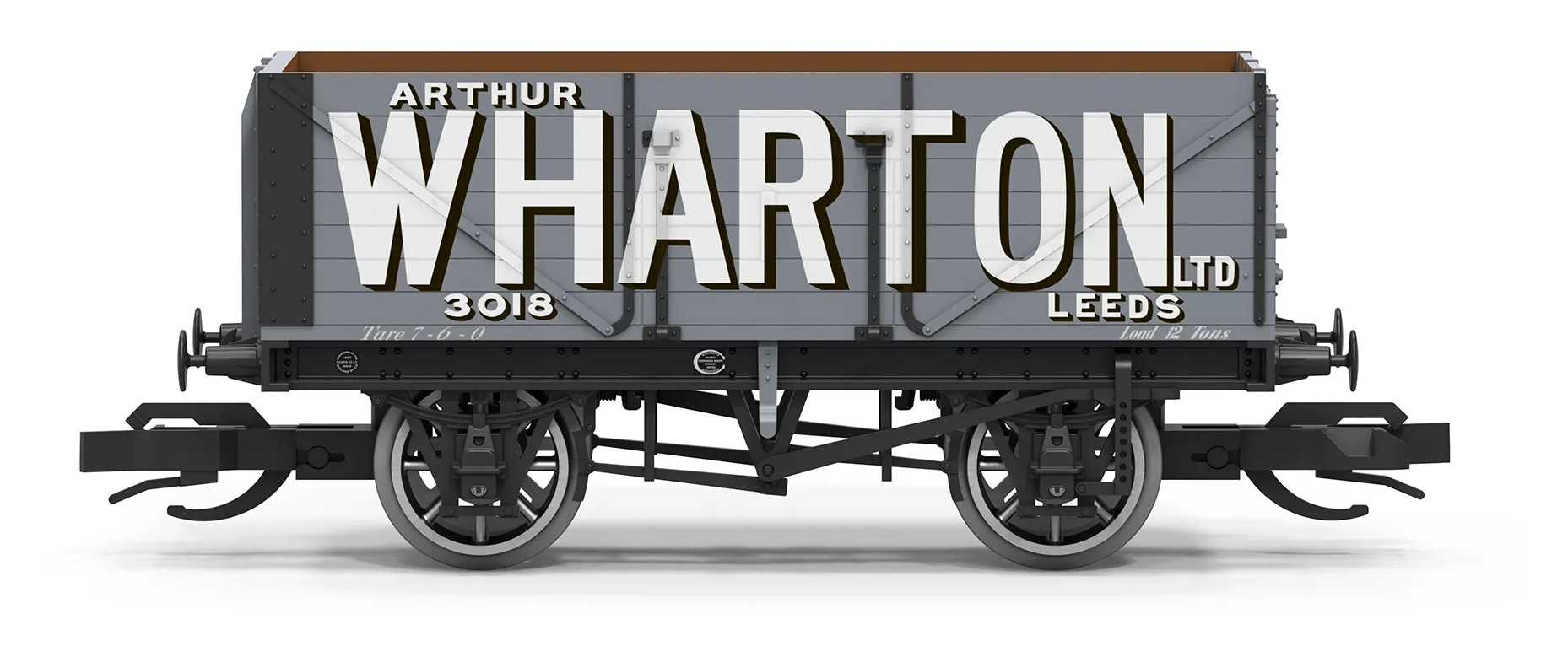
Arthur Wharton Ltd. 3018 7-Plank Wagon, Era II.
Few railway wagon designs are as well-known and widespread as the privately owned three-, five-, and seven-plank open freight wagons of the early 1900s. These simple four-axle wagons, built in the tens, if not hundreds, of thousands, carried all kinds of goods, from bulk materials like sand and coal to finished products such as bricks or bags of cement.
These plank wagons, painted in colorful, owner-designed liveries, were a common sight throughout Britain during the Big Four era and the early nationalization of the 1950s.
Our TT:120 scale model represents the seven-plank design, which often featured the most vibrant and interesting brand logos.
This model is an example of a seven-plank wagon owned by Arthur Wharton Ltd. This model belongs to a coal and coke merchant who operated in the Yorkshire region during the 1920s and 30s. It bears the operating number 3018.
Model Specifications:
■ Detailed, planked body
■ Detailed interior
■ Brake mechanism with clamping mechanism
■ Separately fitted buffers
■ NEM kinematic couplings
Livery:
■ 'Arthur Wharton Ltd' Grey
■ Brown interior
■ Satin finish
■ Era III
History:
Before the introduction of steel wagons in the 1940s, wooden wagons like this one, built to the RCH standard of 1923, were used to transport coal between the collieries and the coal merchants' storage yards. This wagon belonged to the rolling stock of the Leeds coal merchant Arthur Wharton Ltd.
Specifications
Length over buffer52 mm
Reference data
Manufacturer’s item no.TT6052
EAN5063129058401
ReleasedHerbst 2026
ScaleTT (1:120)
EraII
Power systemDC
Railway company–
Market value
Coming soon
The modellbahn·fokus market value index will in future show reference values for both available and discontinued models — transparently derived and continuously updated.
More models by Hornby

Genus Vent Van
Freight wagon type Vent Van der LMS, Era II
TTDCEra II
In the shopView →

Banana Van genus
Banana Van type freight wagon of the BR, Era III
TTDCBREra III
In the shopView →

Bed type 45
Freight wagon type Betts 45 of A & H, Era I
TTDCEra I
In the shopView →

freight wagon
Freight wagon 7 Plank Wagon of the Mortimore, Era II
TTDCEra II
In the shopView →
Comments from members (0)
No comments on this model yet – be the first.
Only signed-in members can write comments. Sign in now
Report an error or suggest an addition
Do you know this model better? The editors review every note.
Please sign in to suggest a correction or an addition.